• Skip to main content
  • Skip to primary sidebar

Mystic Island

Where Everyone Has a Story

  • Stories
  • News
  • Explore
    • Drive-in
    • Tour
    • Map
  • Shop
  • About

Chapter One

Auras: Part 1 — Mother Night

Written by The Keeper Leave a Comment

Mother Night 2David Collins sat at an old, beat up, metal desk. The desk was very similar to the one at which his old boss sat. David always thought that the desk Mr. Finney sat at was like a teacher’s desk. Now, David was a teacher. A substitute teacher, at least. He was not known as Mr. Collins. He was known as Mr. Grimes, although he was not quite sure why. This day, David was filling in for Phil Abbott, an English teacher. David liked subbing for English teachers. English teachers usually left some kind of silent reading for their sub plans, so David didn’t really have to teach anything. He could just sit at the old, metal, Mr. Finney-type desk and draw. He would find classroom markers and a sheet of computer paper, and he would turn the blank sheet into a swirling array of colorful flowing images. Then, at the end of the day, he would find some random place—a classroom, a bulletin board, a kid’s locker—and fasten the picture to it. No one, other than David, knew who was leaving these drawings. Most people thought the mysterious pictures were done by Jacob Grist, but the pictures were not remotely as realistic or detailed as Jacob’s work. (Just so you know, David would be at the middle school when Jacob pulled his little stunt, but David was the only person that didn’t think anything was out of place that day. He noticed a lot of fearful red auras running around him, but the stuff he saw wasn’t any more fantastical than other things he’d seen.)

David had not intended to be a substitute teacher. He came upon the job by accident. He was supposed to be a patient of Ward 6, the mental health division of Mystic Mercy Hospital, but somewhere along his transfer, the attendants lost track of him. David wandered into the island’s middle school, hoping maybe to find a job with the custodial staff. But fate had other ideas for him. When David walked into the school’s office and asked the secretary about a job, the secretary thought he was a man named Bart Grimes, who was scheduled for a job interview at that exact moment. Bart Grimes, meanwhile, had just been killed in a car accident off-island. (You may have seen it on Nick Bishop’s television show, but more on that another time.) David sat in front of Principal Cooper, and Principal Cooper sat with Bart Grimes’s very impressive resume in his hand, thinking it was David that had taught all those other students at all those other middle schools. David was hired on the spot, never asking why they kept calling him Mr. Grimes.

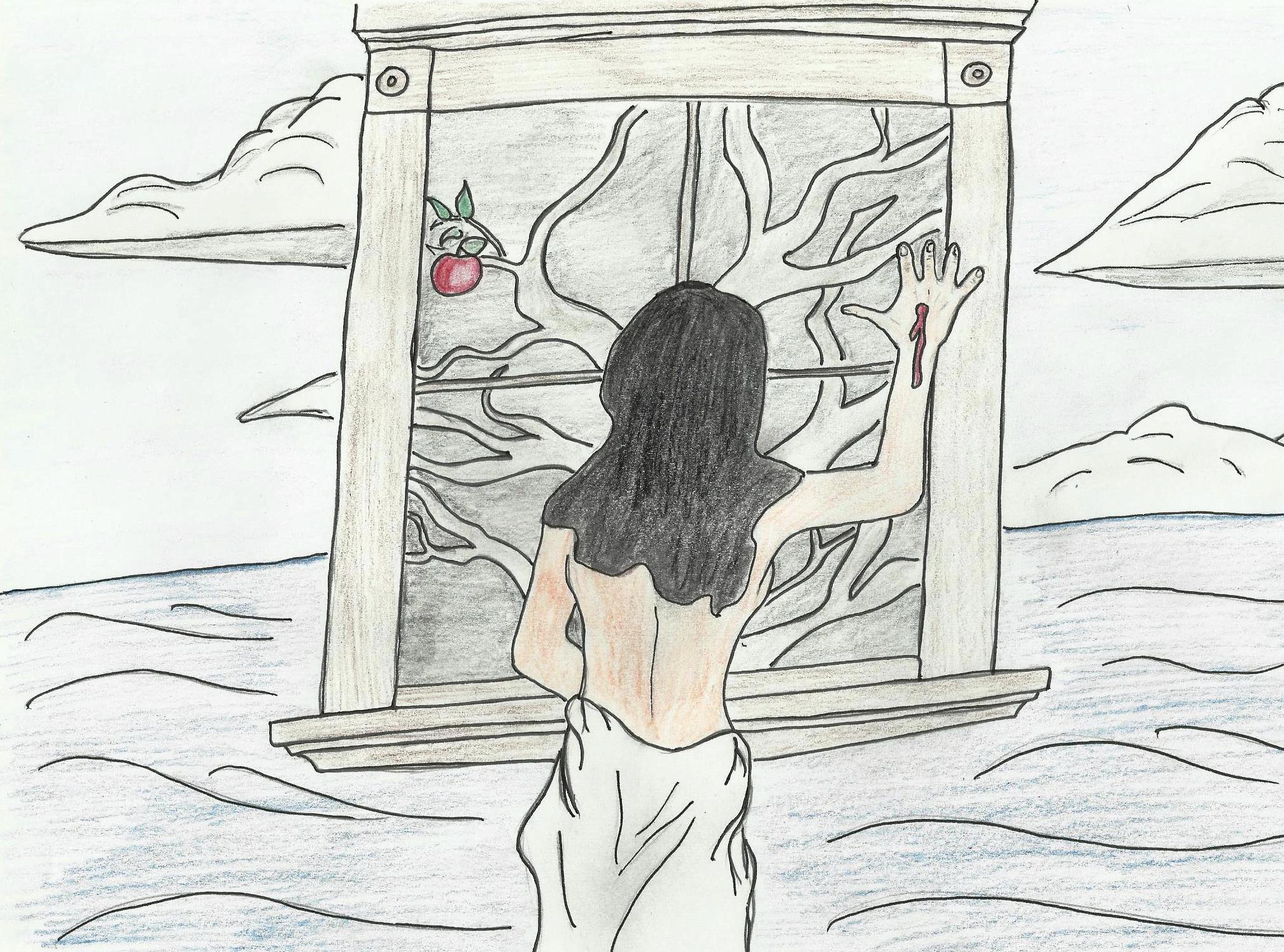
When the final bell rang, and all the students flowed from the room—looking to David like a sea of multi-colored lava—David stood from his seat, setting aside his drawing. He wrote a quick note to Mr. Abbott about how he thought one of the students was possessed by evil spirits. When Mr. Abbott read the note, he would think David was making a hyperbolic joke. David wasn’t making a joke, however, he was quite serious. The student he was talking about was Tommy Rogers. Tommy Rogers wasn’t possessed, he was just an asshole. It would be coincidence that, as David was leaving the building, he affixed his new artwork to Tommy Rogers’s locker. David had titled the drawing, “Mother Night.” It was a picture of two figures, a mother and child. In the drawing, night was falling, and scary things were descending upon them, but the child was comforted by his mother. In David’s own life, when the scary things really did descend upon him, David had no one to comfort him, he just learned to accept it. I’ll let David tell you more about that, and what happened with his former boss, Mr. Finney.

To Be Continued

Filed Under: Auras, Chapter One

Death Tours: Part 1 — Welcome to Death Watch

Written by The Keeper Leave a Comment

032

Paula Reese, sharply dressed, thirty-four year old businesswoman is striding through the crowded New York sidewalk, returning to her office after an important business lunch. Paula just made a big deal, and the spring in her step makes her forget about the uncomfortable high heel shoes she is wearing. Paula is walking with her held high, shoulders back, her stride with purpose. Seemingly nothing can break-a her stride. That is, until a buzz swarms through the sea of pedestrians around her. There seems to be some sort of commotion up ahead, and the crowd, like a flock of sparrows, all move forward in unison.

Paula turns to a young man with shaggy brown hair and a corduroy sports jacket, and she asks him, “What is it? What’s going on?”

The guy with the shaggy hair shrugs and continues, lock-step with the crowd. Car horns begin beeping in the distance, and the crowd slows, the people forming a large semicircle on the sidewalk. People muttering and buzzing with excitement.

Paula uses her new confidence to cut through the crowd to the front edge, as if belonging there. After all, that’s what her boss, John Thompson told her: When in doubt, just act like you belong there. Paula looks up at the surrounding high-rise buildings, spotting countless people peering from their offices, their faces pressed to the glass windows.

Paula is now beside a young man with sunglasses, a backward hat, and earbuds cranking a deep buzzing base rift. “What is this?” Paula asks him.

“Huh?” the man says, yanking the buds from his ears, his base rift now a clear thudding.

“What’s going on?” Paula says.

The young man nods his head, gesturing across the street.

Paula spots the camera crew. The spotlights. The sound booms. Then she spots him. The most recognizable face on television. Nick Bishop. He is good looking, the gray around his temples only now starting to spread further into his dark hair. But today he looks more tired than usual.

The beeping horns intensify as cars crawl by, drivers rubbernecking.

Paula turns to the young man with the earbuds, “Uh-oh, who’s the unlucky person?”

Across the street, Nick is saying something to a man wearing a headset and the man in the headset scrambles about, talking quickly into the mouthpiece. The cameras turn toward the crowd, and a panicked murmur breaks out amongst the crowd, each person looking at the people around him and her, some craning their necks as if looking for someone in particular.

Paula says, “Who’s the—?”

The buzz runs through the crowd like a wave at a stadium, people turning their heads in one direction. Their heads turn toward Paula, and then the crowd, as one, steps away from her.

Paula has a sudden realization, and she begins to plead with the crowd, “What are…? No, wait… It’s not me.”

But the people continue to move away from her, looks of sympathy and thrilled anticipation upon their faces.

“It’s not me. Please. It’s not me.” Paul says. She darts toward another woman in a business suit. The woman flinches. Paula saying to the woman, “Please. It’s not me.”

The woman in the business suit says, “But he’s never wrong.”

Paula reels around at the crowd, begging them for assurance, but none can offer it. She begins backing away from them as they back away from her, Paula almost falling off the sidewalk as she steps into the street. She turns toward Nick and calls to him, “You got it wrong. You got it all wrong.”

Nick lowers his eyes, saying something to the man wearing the headset again.

Paula rants and strides in circles, raving at the passing cars. “It’s not me.”

At this moment, a man named Toby Strunk is driving his car by the ruckus, craning his neck to watch the camera crews. He doesn’t notice Paula ranting. And as Paula reels around, screaming and pleading, she trips in front of Toby’s car. The crowd cringes, gasping, some looking away as Toby’s tires drive over Paula, crushing her body.

Toby stops the car. The crowd is silent. Toby gasps, looking around, noticing Nick Bishop walking slowly from across the street toward his car. Toby says, “Oh, shit.” He then leaps from his car and darts to the front of his vehicle as Nick steps before him. Toby looks down at Paula’s broken body, then up at Nick. Toby saying, “I didn’t even see her.”

Nick tells him, “It’s not your fault.” He turns and looks at the crowd. They cheer.

Generally, he’d throw his arms up with showman exuberance, but now, he looks at the crowd as if seeing a crowd like this for the first time. He looks at Toby. Toby still staring down at Paula— her eyes open, blood trickling from her open mouth. The camera crew is suddenly blocking his view as they get a good close-up of the woman for the television audience.

Nick looks across the street at the man in the headset, his producer Brent Parker. Brent gives him a thumbs-up as the crowd of onlookers begin to disperse and continue on with their lives.

The camera turns from the woman and onto Nick. He says into the camera,“ Welcome to Death Watch.”

To Be Continued


Filed Under: Chapter One, Death Tours, Nick

Beneath the Weeping Tree: Part 1 — The Notebook

Written by The Keeper Leave a Comment

The ApartmentsThe cover of the notebook was faded, drained of its color by time. Like the brick facade of some boarded-up firehouse, it could hardly be called red at all. More of a pink, really. The edge that opened to the pages within was tattered by its lengthy term in the bedside drawer, and the spiral, at one time a perfectly-aligned chrome coil, had lost its shape—the tiny loops bending into one another like a bench-load of old men. “Summertime Blues” ribboned across the middle of the cover, words placed there by a careful hand. The title set this notebook apart from the others in the drawer. About a half dozen of them were crunched in there behind a neglected Bible, a litter of foam ear plugs and a bound collection of sweepstakes entries. This evening, the other notebooks were still in his mom’s drawer back at the apartment. He only removed one at a time in order to avoid suspicion. With a little patience, there’d be plenty of time to eventually read them all.

Cooper squatted on the wobbly sheet of plywood high in the tree. Dusk would settle soon, and he imagined he would end up descending in the dark. A bird cawed, and he watched it dart from one treetop to another, he then returned his attention to the notebook. Its spiral binding snagged his shirt. He wove it back out of the material, leaned against the tree, and flipped open the cover. Above him, tassels of willow danced in gentle loops from the top branches, pixilated by the fading glow of sunset. They were like tiny spires, he thought, each blending in with the others like an accusatory threat. There were hundreds of them, and if they were to fall from branches like tears, he’d be buried in their thrust—invisible to the rest of the world. Just like his mother. He didn’t want to duck beneath the wing of anonymity as she’d done, and he toyed with the idea of abandoning his platform and climbing the tree’s pinnacle to avoid his far-fetched burial fantasy. Instead, he settled into the first pages of the notebook.

July 5, 1980

The 4th started off as an amazing day, but I should’ve seen it coming—the disappointment that would be thrown on me later. He does it to me every time—builds everything up like we’re the most durable couple in the entire world with nothing but plump babies and picket fences in our future. But it never takes long for his tune to change. I really don’t know what’s going to happen here, and I’m a little scared. I thought things might change yesterday. Grandma used to tell me “your mind is like a tire on the car: it can always be changed.” But it doesn’t seem like that adage applies to Hank.

I should’ve known things would go a bit haywire when I saw him show up with a cooler of beer. He knows I can’t drink because of my “condition”. He’s so into denying that this situation even exists that he tells me I can drink until I’m showing. That’s just another lie that he’s told himself so many times that he might actually believe it by now. He had three empties rattling around on the floor of the car by the time we got to Black Rock Beach. He said we needed to be there by noon to secure a spot for the fireworks at dusk, but I think what he really wanted was a place to put away a 12 pack while looking out at the bikini girls (who aren’t pregnant) and think about the possibilities. “Baby this” and “baby that” he keeps saying. He sweetens up all of his lame excuses with the glass-bottomed hope that I’ll see things his way. But I wish that he would just see things my way and I used yesterday as an opportunity to tell him so.

We had just gotten to the beach, and as I’d predicted, we were some of the first people there. The tide was creeping in gently, and after we spread out the blanket, I sat under the umbrella while he set up his cooler and radio. I watched for a while as the barge off shore was loaded up with fireworks. I wonder how you get a job being one of those people, floating out on top of the ocean with a boat-full of explosives!

Toward the end of the first six pack he nodded off, and I sat there and watched some of the other people who’d started setting up their stations on the beach. It’s strange; since the doc told me I was pregnant I’ve lost interest in reading books. I guess it takes something as real as this to make me disinterested in the world of fiction. One cool thing about it is that I am more inspired by people-watching now. It’s so fun to sit and check them out, just imagining what is hidden in the deep folds of their lives. I wonder how many of them have parallels with me. A fat old lady sitting in a lounge chair, a lifeguard walking up the beach with a newspaper tucked under his arm, a little girl digging frantically in the muddy sand where the tide rolled in. I wondered about where they all lived and what they were each thinking. I rooted for the little girl’s sand-creation to survive the tide.

When Hank woke up, his back was streaked red in the spots he hadn’t been able to reach with the sunscreen. I almost laughed but I didn’t want to risk pissing him off or sending him into one of his “poor me” fits of silence. He can be such a baby sometimes! I needed to keep him in good spirits so I played the motherly role (hoping he’d take notice of my ability in that area) and soothed his back, rubbing in extra lotion. Finally, he rolled over and reached into the cooler for another beer. He was all groggy and when he yawned I could see sticky lines of saliva connecting his lower and upper lip. Such a lovely sight; the father of my future child! I figured it might be a good time to discuss the baby, but when I brought it up, he raised the palm of his hand toward my face to shut me off. He doesn’t want to talk about it!

Hank needs to take some responsibility for our child. The only time he mentions it is when he tells me I should just get rid of it. “We’re not ready for it right now,” he says. I know that he’ll never be ready for any responsibility. So I just sat there and watched him pour another few beers down his throat. When dusk finally happened, the fireworks went off as planned; big blossoms of light radiating out above the people gathered on the beach, spiraling toward the water, but disappearing before they made it to the surface. It’s amazing how there is such a beautiful bloom, and then the next moment there is no evidence that it even existed.

I feel like our relationship is similar; we had our fireworks and now when I try to remind him about our responsibility, he doesn’t want to talk about it. He’d rather pretend that the fireworks never happened.
I’m scared . . . .

Cooper shut the journal and slid it into his back pack where he was sure not to forget it. Anything left behind was a potential victim to rain or wind or theft. And she’d just about kill him if she found out that he’d been prying into her private thoughts. He sat there—up where he always hung out during the intermissions between school and sunset. It was a place apart from his mother’s nagging questions and away from any sense of accountability. There was no chance of encountering the heady stare of his English teacher, Miss Foster, or the mocking catcalls of the jocks who rode the school bus with him. Up there in the tree he needed to look out for Number One and that’s all. A liberating idea. He was free to read from his mystery stories—Agatha Christie, Sir Arthur Conan Doyle, Edgar Allan Poe—uninterrupted, or mimic the movements of squirrels (as he often did) in an attempt to study their habits. During the past week, he began to swipe the journals from his mother’s nightstand. Real mysteries were buried in those pages, and he knew that he might begin to understand her life if he took the time to figure them out.

He always tried to avoid making personal connections with the entries, maintaining the “outsider-perspective” of a fiction reader. It was a devise that was suggested to him by one of his elementary teachers a few years back, and he never gave it much thought back then while reading James and the Giant Peach or Bearstone. But his mom’s journal entries were different, almost inviting him to guess where he fit into the happenings. Often he was mentioned by name as she wrote a mixed bag of entries describing times he made her proud—like when he designed the runner up car in the pine box derby back in Cub Scouts—but also throwing in her ideas about things he did that pissed her off. He read her impressions from the day he scribbled with crayons on the bathroom wall when he was five or six years old—she was thinking of completely shutting him off from any Christmas presents that year.

The entry he just finished was in a class of its own. It painted an image of his mother in her fragile youth. In her own words, she appeared confused and scared, but perhaps more important was the inner struggle that tortured her. As long as he’d known her, his mom had never been a huge advocate of giving voice to her opinions unless it regarded him. He could tell when something didn’t sit well with her, but she usually let it slide and opted for silence instead. And that seemed to be the case with the journal entry. But this was different. He was implied in there—an unborn child with a hurting mother and a calloused father. Hank. There was a name he’d never heard uttered in their apartment. Was Hank indeed his father? The prospect of asking her about Hank bore visions of an explosive battle. Not only would he be implicated in stealing her privacy, but the question would act as a tool, violently tearing the stitches from a wound that certainly would never heal. He understood that she must carry deep resent for this man, Hank, and asking about their relationship would do nothing to lift the burden.

Until he knew more.

Through the thick foliage, the sharp report of a backfiring car was followed by squealing tires. He imagined a jacked up Camaro peeling across the parking lot of their apartment complex, thudding over the speed bumps and fishtailing out into the road that connected the development with the rest of the island. It happened all the time. He had fantasized securing a steel cable across the access road, anchoring one end to the sign that boasted “Black Rock Villas” in gawky, gold lettering, and the other to a light pole. It would bring great satisfaction to watch the car halted by a shower of sparks from the capsized light post or else drag away the sign that marked the driver for the world to see. It wasn’t exactly a status symbol to claim residency at “The Villas.” It was the stigma of living there that had spurred Cooper into sneaking glances at his mom’s journal.

At first, he’d wanted to learn enough about her life to know how they’d landed in the housing complex—a single mother and her only son. He waited for her to get into the shower before going to her bedroom to read the journals. Most were filled with trivial entries, describing new recipes she saw on TV or an info-mercial that captured her interest. After a few days, though, he discovered a hard-bound notebook toward the bottom of the night stand drawer. A light stain—coffee or coke, he guessed—smeared its cover like some amorphous silhouette. In it, he read about her arguments with his grandfather and about people named Marjorie, Hank, and Leonora. Although he remembered his grandpa, he never met or even heard of the rest of them. But the descriptions of every day events in his mom’s life carried a thrill that he couldn’t explain. And when he almost got caught prying into the journal that afternoon, he disciplined himself that only in his private place could he read the entries.

The tree fort was a secret that he believed was safe from the rest of the world. Countless afternoons of scouring the areas around the apartment complex trash dumpsters had yielded the raw materials to make it all happen. The rectangle of plywood that turned out to be the floor was the first item discovered, and the first installed. Tiny fragments of carpet clung to the rusty staples that lined its rough surface and he’d spent an entire Saturday sanding it smooth and then lugging it out to the woods, keeping a careful eye over his shoulder to make sure that nobody was tracking his movement. His mom had a coffee tin full of odd shaped nails and screws and he borrowed a few of them to affix the platform in the crook of a large willow tree he scoped out during the previous spring. He noticed the perfect curvature while out collecting soil for a school science project and he immediately earmarked the spot for his “getaway.”

During elementary school, Cooper had friends whose fathers built them tree houses to go along with their jungle gyms and sand boxes and rope swings. But, while those contraptions proved fun for most kids his age, it didn’t seem natural for him to use them. It was like using a public restroom—not as relaxing as home. So, the idea was planted for many years and it felt good to finally set out to make good on the concept.

A shelving unit had been tossed, along with some wrought iron handrails, and on a Sunday in May, he rigged up a rope to hoist all of the materials up into his secret nook. As dusk neared on that evening Cooper experienced a sense of accomplishment like no other in his life. He leaned out over the wrought iron railing and sucked on a cigarette, his day’s work complete. When darkness descended on the woods, he leaned back and scattered a flashlight beam across the old rack of shelves. Remnants from torn-away stickers lingered on their wooden surface, and he made a mental file of all of the things he planned to bring up there to transform it into his home away from home. It was like a satellite bedroom and it pleased him deeply to think about the prospect of hanging out there without the possibility of his mother’s voice needling through the door. “Could you take out the trash?” “Can you run to the store for me? I’m out of cigarettes!” “Did you do your homework?” Nothing to listen to but the song of birds and whisper of leaves as the wind riffled through them.

He looked to the spot and was pleased to realize that it had turned out pretty much as planned. A small stack of books was wedged into the lower shelf, while the upper shelf trophied a pair of candles. His mom always warned him against burning candles in the apartment, telling him stories of neighborhood kids setting the house on fire during her childhood. She described the entire sky lighting up in a deep orange tint as if the night time was melting. “It was just like a fireworks display,” she told him, and he could still remember wondering whether she’d ever seen an actual fireworks display that she could compare it to.

Now, as he zipped her journal into his back pack and prepared to head back to the apartment, he knew that she had.

To Be Continued

Filed Under: Beneath the Weeping Tree, Chapter One

Salt and Lime

Written by The Keeper Leave a Comment

Make no mistake about it, Satan is strikingly beautiful. She is tall, seemingly, but in reality, she is no taller than any given observer. It’s more that her presence breaks down the laws of relative height, increasing her stature and dwarfing her surroundings. Her features are delicate. Doll-like. Her full, pouty lips appear as if hand painted. And her eyes shift color—from silver to gold—depending on the light…or her will. How do I know all this about Satan? I’ve met her, know her well. But this story isn’t about my association with her. This is the story of Christopher Foster, and the wager he made.

So picture Satan sitting there, just as Christopher saw her, turned with her long legs crossed at the thigh, running parallel to the bar, her thin torso fluidly bending, seductive, serpentine. With one hand, she adjusted her short, black dress, her other hand fidgeting with an opal earring. Her red hair was drawn atop her head, revealing the back of her long neck and making visible a twisting tattoo at the top of her spine. The tattoo appeared to be an infinity symbol, but, like all aspects of her, appearances are deceiving, prejudiced by the perceptions of the weak-minded and the weak-willed. The disproportionate length of her legs and torso, the perfect flow of line and form, gave her the impression of an El Greco painting. But there was one feature that overpowered all else. Her eyes. One’s attention always went to her eyes. And it was her eyes that caught poor Christopher Foster.

A word about Chris, a man creeping through his early-thirties, a man not unattractive, but not altogether noticeable, a man set mid-point along charisma’s bell-curve. Chris had gone into The Dutch Horse Pub merely to relieve the tension brought on by his middle school students’ determination to not learn. He had no intention of meeting anyone, let alone a beautiful woman. He was never the type to pick up women anyway—his sense of small talk dulled by innate shyness and his year and a half of marriage with Molly. But, against convention, common sense, and the tidal pull of his marriage vows, Christopher Foster found himself sitting, although the place was virtually empty, immediately to the left of this woman at the bar. Chris ordered a scotch, seemingly the right drink to untie the monkey-fist knot in his head. Generally he relaxed in front of the television with a beer, but with Molly away for the week visiting her mother—a woman with a knack for tying monkey-fist knots in her own right—Chris decided to seek the white noise company of bar chatter.

Now, listen, Satan isn’t, as most people may believe, an embodiment of evil. Satan is temptation stripped to its purest form, and it is man that sinks to evil when answering her siren call. The danger of Satan is not a malignant heart. The danger of Satan is that she is a woman, and man is weak.

The bartender, the same nondescript, stereotypical character that inhabits countless movie and television bars, set a glass of Dewars on a cocktail napkin. Chris sipped the drink, the liquor burning and puckering his lips. He felt the girl to his right staring at him. He didn’t dare look at her, but the more he resisted turning toward her, the more the urge to do so overwhelmed him like an unscratched itch. The girl mercifully broke his torment by speaking first, inviting, commanding, his attention. Satan’s first word to Christopher Foster was harmless enough, she said, “Hi.”

Chris stole quick glances to his right, determining if she were speaking to him. When he finally turned to face her fully, he fell into the two silver pools of her eyes, lost, drowning. He somehow climbed from their depths, almost gasping, and uttered a response. “Uh, hi.” He then retreated to the safety of his drink, regarding the glass like a gambler pondering a bet.

“Let me guess,” the girl said.

Chris looked at her.

The smile on her face was that of a child first discovering some miracle of nature. “You’re a teacher,” she said.

He was going to respond, but the fish scale flicker of her eyes caught him again, dragging him into those silver pools once more.

“Am I right?” she said.

“Um…yeah. Yeah, I am a teacher. How did you know?”

“You have that exhausted, fear-for-the-future look that can only come from working with America’s youth. Let me guess, middle school?”

Chris smiled. “You’re good.”

“I know people.”

“And what is it you do?”

“Guess,” she said, shifting on the stool, her knees brushing his thigh. She then, with the quick grace of a magician, released her hair, shaking her head, strands the color of a doomed sailor’s sunrise cascading over her shoulders and down her back.

“Huh?”

“It’s your turn to guess my profession.”

“I wouldn’t dare.”

“What are you afraid of?”

“I don’t know. Offending you.”

Her eyes widened, flickering like lightning jumping clouds. “Offending me? Now you haveto guess.”

“Nah, really, I don’t think I should.”

“Why would you think your guess offensive?”

“Because I’m guessing you’re no school teacher.”

“On what do you base that assessment?”

“I don’t know,” Chris shrugged, again retreating to his drink.

“Shall we make things interesting with a wager?” she said. She ran her finger along the lip of her wine glass.

“What’s the bet?”

“A drink. A shot.”

Chris shrugged.

“Do we have a bet?” she said.

“I guess. But I don’t want to be patronizing by saying you must be a model or an actress, although you very well could be. And I certainly don’t want to suggest you’re a stripper or something, but I’d say you definitely make your living with your sex appeal.” He suddenly wondered where his innate shyness had gone. He coughed, and quickly added, “Maybe that’s the wrong word. I think charisma is a better word. It-factor?”

“Don’t strain yourself too much. You already said it,” she said.

“So which is it?”

“Which is what? Which profession is mine?” she said.

“Yeah.”

“If you can’t reallyguess, then I can’t reallytell.”

“But you said, I said it,” Chris said, “suggesting I guessed correctly?”

“Theityou said was nothing. You never guessed at all. You made assumptions, not wanting to patronize or offend. But still wanting to somehow compliment me. You were being safe, not taking responsibility for what you say. If you can’t state your true thoughts, then I don’t want to hear them.”

“What a jip,” Chris said. He sipped his drink. “So who gets the shot?”

“We’ll both do,” she said, and when Chris looked up, he found the bartender standing before them as if conjured from thin air. “Two shots,” the redhead said to the bartender. “Of what?” she said to Chris.

Chris raised his hands in a helpless gesture.

“Shall we go for flavor or damage?” she said.

“Maybe a little of both?”

“Two Red Deaths,” she said to the bartender, her eyes not leaving Chris.

“Five liquor drinks aren’t compliant with our liquor license,” the bartender said.

The girl’s gaze flashed onto the bartender. “Is that really a problem?” she said, her eyes a deep gold.

“No, I guess not,” the bartender said, whisking bottles from a speed-rack with the quickness of a gunslinger.

“Red Deaths might be a little more damage than taste,” Chris said.

“Is that a bad thing?”

“No, just dangerous.”

The drinks appeared before them.

“Maybe we should have a taste for danger,” she said, holding the shot between her thumb and forefinger.

“What should we drink to?” Chris said.

“I chose the drink, you choose the toast.”

“To a taste for danger,” Chris said, raising his shot.

“Amen,” the girl said, clinking his glass with her own.

They drained the drinks.

Chris winced.

“Danger never tasted so sweet,” the girl said, licking her fingers where some of the drink had spilled.

“So now what? Are you going to guess my name, too?” Chris said. He placed the empty shot glass across the bar, as if trying to distance himself from it.

“I wouldn’t want to amaze you with my powers of perception.”

“Yeah, all right,” Chris chuckled. “Well, I bet I can guess your name before you can guess mine.”

“Oh really?”

“Do we have a bet?” he said.

“You’re on.” She extended her hand to shake on it. He took it. Her fingers, caressing his palm, seemed to run down his arm and grip his sex. He shifted on the stool, not wanting to release her hand, but needing to. He lifted his scotch to occupy his hand.

“All right,” he said, lifting the glass toward his lips and grinning, “take your best guess. What’s my name?”

“Christopher.”

All expression slid from his face. He lowered the scotch. “How did you do that?”

“Lucky guess.”

“No, really, how did you know my profession and my name?”

“No, really,” she said, her gold eyes leveling on him, her childlike smile vanishing. “It was a lucky guess.” Her tone had such conviction that he pursued the subject no further. “So,” her smile returned, “you have one guess for my name.”

“I don’t have a chance.”

“There’s always a chance,” she said, her eyes flicking silver again.

Chris drained his scotch. He slurped an ice cube between his teeth and took the opportunity to have a good look at her. He started at her stiletto shoes, which made her long legs look impossibly longer. Then he moved up to her ankles, noticing on one of them the tattoo of a cross—three nails were driven into its points, but a crucifixion victim was noticeably absent. From her ankles, her contoured legs were an endless journey to the rolling hills and planes of her hips and stomach and breasts. He abandoned this journey before reaching her eyes. He looked over her shoulder, avoiding her gaze. “Charlene,” he said, “No. Serena. No. Alana. It’s something unique. It’s….”

“I’ll give you one hint,” the girl said, “it’s the name of the first woman.”

“Eve?”

“Lilith.”

“The first woman of what?” Chris said.

“The first woman, period.”

“Did someone recently rewrite Genesis without my knowledge?”

“Yes,” she said. “Only, not recently. Eve was Adam’s second wife, made from his rib—an unimportant, nonvital extension of his body. She was created to be subservient, to honor him and bear his children. Lilith, on the other hand, was created along with Adam, made from the same earth as Adam. She and Adam were equals, each with independent, strong wills. But we know what happens to strong willed women. Adam found her to be difficult, labeled her a bitch, and had God cast her from Eden.”

Chris raised his eyebrows. “If Lilith and Adam were equals,” he said, “then why did God cast out Lilith and not Adam?”

“How the fuck should I know?” the girl said. She sipped her wine. Her eyes were two gold suns partially eclipsed by the black holes of her pupils. Those two pupils reflected no light, they were wells and Chris was falling into their bottomless depths. Her voice brought him back. “You owe me a drink,” she said.

“All right, Lilith, what will it be?”

“Loser’s choice.”

Chris scowled. “Okay, let’s see…how about…I don’t really know any drinks…um, I don’t know, Sex on the Beach?”

“Black Rock Beach isonly a mile from here,” she said coyly.

“You sure do play hard to get.”

“Two tequilas,” she said to the bartender, who again appeared before them as if from thin air. She then turned to Chris. “I don’t play at what I’ve already won.”

“And what game is that?”

“Life.”

“Life’s a game?”

“Absolutely.”

“What do you win?” Chris said, lifting the shot of tequila and picking up the lime that was set before him.

“You win the only thing you can take with you when it’s done,” she said, taking the lime from his fingers.

“And what’s that?”

“Memories,” she said. She ran the lime along the contour of her neck. “The one with the best memories wins.” She sprinkled salt along the same contour she had run the lime across, and she pulled back her hair, offering her neck to Chris.

Chris stared at her, paused, started forward, paused again. He looked helplessly into her eyes. She arched an eyebrow. He leaned in, licking the salt from her skin, and he downed the shot. He reached for the lime in her fingers, but she jerked it away, placing the wedge between her teeth, smiling. The smile not so childlike anymore. Chris stared at her, paused, started forward, paused again. He blew out a stream of breath, took the lime’s exposed half in his teeth, and tugged. Her mouth, unyielding, met his. Her full lips brushing across his lips. He pulled away, feeling lightheaded, unsure if it were the alcohol or her kiss.

“Whoa,” he said. It was all he could think to say.

The girl again licked her fingers, grinning.

“I suppose now I have to put salt on my neck?” Chris said.

“Why dull the taste,” she said, draining her shot and sliding the glass across the bar’s top.

Chris watched the glass come to a stop. He said, “So who’s winning?”        “Winning what? Life?”

“Yeah.”

“Not you,” she said.

Chris twitched his head, lowering his brow. “Why do you say that?”

“You can’t win if you don’t want to.”

“What makes you think I don’t want to?”

“The way you skirted the issue of my profession. The way you defer the choice of drink to me. The way you hesitated licking the salt from my neck or taking the lime from my teeth. You’re afraid to live life, never mind win at it.”

“What? Just because I hesitated taking a body-shot means I’m afraid? Did you ever think that maybe I hesitated because I’m a married man?”

“Happily?”

“Of course happily.”

“What’s your wife’s name?”

For a panicked moment, he couldn’t remember. “Her name? It’s…Molly.”

“Are you sure?”

“What? Of course I’m—Hey, look, what are you implying?”

“If you’re happily married to Molly, then why are you sitting here beside me?”

“What do you mean?”

“The bar’s virtually empty, why did you choose to sit beside me?”

“Jesus, I was just sitting beside someone to talk to.”

“Why didn’t you sit beside that guy over there?” she said, nodding toward an old barfly across the bar.

“What? Look, you need to get over yourself.”

The girl stared at him, silent for a moment, and then, nodding slowly, she turned her bare legs away from him. Facing the mirror over the bar, she pulled up her red hair again. Chris could now see that the tattoo that had appeared as an infinity symbol was, in fact, a twisting configuration of three sixes, or nines, or both. She stood from the stool and began to walk away. Before Chris could conjure the words to bring her back, she turned and leveled her gold gaze upon him. “Well?” she said. “Are you coming?”

I know what you’re thinking. You’re wondering if Chris followed her or not? Do you really need to ask? Of course he followed her, and that night, Chris swam freely in the silver pools of the girl’s eyes. When it was over, Chris lay in his bed, his will a desolate landscape leveled by a force of nature, and he looked up at Lilith. She was sitting up in the bed, her body outlined in the dim light. Chris saw another tattoo, this one spread across her back. At first, he thought the tattoo was of horns, but upon closer inspection, he saw that they were upside-down angel wings.

“What do these mean?” he said, tracing the tattoo with his finger.

She shifted her upper body to face him, the sweeping hourglass of her torso turning, and she placed her weight on one hand, her long hair falling over the front of her shoulder. Her gaze was on him, direct and undeniable. “Those are my angel wings,” she said.

“Why are they upside down?”

Her full lips looking incapable of ever producing that childlike smile, and with a voice, solemn and distant, she said, “Because I’m no angel.”

Here’s the moral of this tale—surely, a story of a man’s dance with Satan would have a moral. Surely there has to be a price for sin. What was Chris’s price? Was it his soul? No, not in the direct sense, anyway. True, Chris did lose part of his soul that night, but Lilith didn’t take it. Was the price of his sin Molly discovering his infidelity? Actually, no. Chris and Molly remained together, seemingly happy, till death they did part, old and gray, Molly never the wiser to Chris’s betrayal. But don’t worry, Christopher Foster did pay. He paid the highest price of all: the image of that girl’s eyes regarding him over her shoulder, her hair cascading, lips pouting, that perfect gaze was carved into his memory. And to his dying day, old and gray, that image never left him, his longing to hold her again growing stronger with each sunrise and sunset. And, true enough, when he died, memories were all that he took with him, but with that one memory, he was never quite sure if he had won or lost.

Filed Under: Chapter One, Uncategorized

With Drawn: Part 1 — Once Upon a Time

Written by The Keeper Leave a Comment

Once upon a time, several adults sat in a conference room talking about a boy named Jacob Grist. The conference room was blindingly bright due to the overhead florescent lights, as if everyone were caught in a perpetual camera flash, and the room’s orange carpet was worn and smelled of countless boring conversations. The long, wooden table at which the people sat had several swears etched into its top. The room sometimes served as a detention hall, and students, often bored or angry—or bored andangry—would alleviate that boredom and anger by writing unkind words on the table.

Sitting at the head of the conference table was a man named William Warner. He was the head of the Special Education Department at the Mystic Island Middle School, which is where Jacob Grist went to school. William Warner looked like he might be a used car salesman. He had thinning hair that was slicked back with a shining ooze of pomade, strikingly white teeth, and a thin mustache. His face had jowls that distracted from a once prominent cleft in his chin.

William Warner said to the people gathered around the conference table, “Today is October 1st, 2007, and we are here for the three-year reevaluation of Jacob Grist’s Individual Education Plan. It is our job to reassess Jacob’s eligibility for special education services.” Here he flashed an ultra-white smile and he gestured to the group of people at the table as if they were a used Corvette on a showroom floor. He said, “I thank you all for coming to this meeting. You are all integral pieces to Jacob’s success. And, as is tradition at the beginning of our IEP meetings, I ask that each member of this team now introduce himself or herself.” Warner motioned to the woman seated to his left. “And we can start with Jacob’s mother, Joanne.” Warner’s crooked, ultra-white smile widened and he said, “Whoops. I suppose if she is to introduce herself, then I shouldn’t do it for her.” He laughed, but no one joined him in the laughter. He cleared his throat and gestured to Joanne Walsh again, saying, “So, take it away, Mrs. Walsh.”

The woman seated on William Warner’s left was indeed Jacob’s mother, Joanne Walsh. She had a different last name than Jacob because Jacob’s father had died and Joanne had married another man with another last name. Joanne Walsh was a very pretty woman. Once, some may have even considered her vibrant, but it now looked as if life had worn away a great deal of vitality from her features. She had long, chestnut hair that she wore in a haphazard ponytail, and she no longer bothered to wear makeup. Joanne allowed what some might call a “Mona Lisa smile” to creep across her lips. Joanne’s dark eyes had a touch of shame and embarrassment in them as she looked at the other people seated around the table. She said, “I’m Joanne Walsh, Jacob’s mother.”

Joanne looked at the man that was sitting on her left. This man had thick black hair and a horseshoe mustache that ran down the sides of his mouth. The man was a rugged looking, blue-collar type. He was Jacob’s stepfather and it was his turn to introduce himself, but he did not introduce himself right away. Instead, he glanced around the table in silence. Then he said, “Dennis Walsh. Stepfather.”

Dennis did not bother to look at the woman to his left to prompt her for an introduction. The woman spoke in a high, squeaky voice. Some have described this woman’s voice as being like fingernails down a chalkboard. This woman said, “I’m Martha Dell. I’m Jacob’s math teacher.”

Ms. Dell looked to the next person, which was a tall, thin man. He was dressed casually for a teacher. He had shaggy, brown hair and a couple of days’ worth of growth on his chin. This man was Jacob’s art teacher.

Dennis had disdain for the art teacher, too.

The man said, “I’m John Berkley, Jacob’s art teacher.”

Sitting on John Berkley’s left was a very attractive, young, blond woman. This woman was the school’s psychologist. John Berkley looked at the woman to prompt her introduction.

The woman had ice-blue eyes and a warm smile. The woman said, “I’m Amanda Lansing, the school psychologist.”

There was no one for Amanda to prompt for an introduction, because the person to her left was William Warner, meaning it was his turn to speak, and William Warner rarely passed up an opportunity to speak. He said, “Okay, good, now that the introductions are done, we can get down to the business at hand. That business being the reevaluation of Jacob’s IEP. And because this is the three-year reevaluation, we retested Jacob for a better understanding of his cognitive and psychological makeup. And it was our esteemed colleague, Ms. Lansing, here”—William Warner gestured toward the school psychologist as if she were another Corvette in a showroom—“that did the testing. So, without further ado, let’s hear what Ms. Lansing has to say about our friend Jacob.”

Amanda Lansing opened a file and took out a report. She paused a moment, glanced around the table with her warm smile, and then read the report. “Jacob Grist is a thirteen year old male attending school here at the Mystic Island Middle School. Jacob is diagnosed with Asperger’s Syndrome, a high-functioning form of autism. Jacob’s parents are concerned that Jacob’s lack of focus is greatly interfering with his academics.” Amanda paused again and glanced up from her report to look at Joanne Walsh.

Joanne saw that everyone at the table was looking at her. Ashamed, Joanne looked down at the table. She saw a statement etched into the edge of the wooden table. The statement was: PRINCIPAL COOPER IS A DICK.

Amanda Lansing continued with her report. Amanda saying, “Jacob’s parents are also concerned that Jacob is having problems with the social dynamics of school. And that he may be the target of bullying.”

Joanne looked up from the table and said, “He may be?” She said this in a sarcastic tone.

Amanda Lansing did not respond to Joanne Walsh’s sarcasm. Instead. She said, “The testing shows that Jacob is highly intelligent, but easily distracted.”

Dennis Walsh flashed his bitter glare toward Amanda Lansing. Dennis saying, “Easily distracted. Is that shrink jargon for lazy?”

Amanda Lansing’s ice-blue gaze snapped to Dennis, forcing his eyes from her cleavage. Amanda said, “Often those with Asperger’s Syndrome are easily distracted. And I certainly found in my testing that Jacob was having great difficulty focusing on the tests.”

“Did you wear that shirt when testing him?” Dennis asked.

“Excuse me?” Ms. Lansing said. Her tone was a mix of shock and anger, and she arched her right eyebrow.

“I’m just saying,” Dennis said, “some might find that shirt distracting.”

William Warner put up his hands and said, “Okay. Okay. Let’s stick to the report here.”

“I thought we were,” Dennis said. “I’m just questioning the test’s authenticity.”

“I don’t see what my shirt—” Amanda Lansing began to say, but William Warner interrupted her.

William Warner saying, “Okay. Okay. Like I said, we need to stick to Ms. Lansing’s testing results. So please continue, Ms. Lansing.”

William Warner then glanced at Dennis and gave him a very slight, sly grin.

Amanda Lansing took a deep breath, her bosom rising and lowering in her low-cut shirt. She cleared her throat and said, “What I do find interesting about Jacob is that, although many people with Asperger’s Syndrome have poor motor skills, Jacob is an exceptional artist.”

Dennis muttered, “No, he’s an exceptional doodler. He doodles when he should be doing his homework.”

John Berkley said, “Jacob has a gift. I have never seen an artist like him. His sketches take on an almost life-like quality. When the light hits them right, you would almost swear that the drawings move. And he certainly has great focus when it comes to his art. It’s almost trance-like.”

Dennis looked over at the art teacher. Dennis saying, “Yeah, you’re right, Mr. Art Teacher, trance-like is a good term for it. When Jacob is supposed to do his homework, he goes into a trance. When Jacob is supposed to do his chores, he goes into a trance. It’s called selective hearing. Jacob is lazy. And he’s weird.”

Joanne placed her hand on her husband’s forearm. Joanne saying, “Dennis, please.”

Dennis took his arm from under his wife’s hand, Dennis saying, “No, it’s true. All these people talk like they somehow know Jacob more than we do. They talk about these”—Dennis made what are known as air-quotes with his fingers— “‘trances’ like they’re something other than a kid just being lazy.”

Dennis then said, “What Jacob needs is a swift kick in the rear to wake him up.”

Amanda Lansing said, “People with Asperger’s Syndrome are generally hyper-focused on some things, while at the same time, they can be completely unaware of other aspects of the day-to-day world. Aspects that we take for granted.”

“And you know, that’s another thing,” Dennis said. “Who even says that Jacob has this Asperger’s thing?” Dennis gestured toward Amanda’s cleavage. “You even said it yourself, these Asperger’s people can barely write, never mind draw like Jacob can draw. Have you seen him twirl a pencil in his fingers? You call that a lack of motor skills? I don’t buy what you’re selling here, lady.”

Amanda said, “Twirling the pencil is known as a stim, or a self stimulatory behavior, and—”

“Uh-uh, no,” Dennis said, shaking his head. “I don’t buy it. He’s just a weird kid.”

Joanne flinched at her husband’s statement.

Dennis glanced at his wife, Dennis saying to his wife, “Sorry, Honey, but he is. And he’s lazy. And it’s nothing to do with Asperger’s or autism, or any of these other ADHD, QRST, whatevers. He’d just rather draw than do his work. Hell, there’s things I’d rather be doing than working, too.”

Joanne said under her breath, “You’re notworking.”

Dennis glared at his wife. For a moment, it looked as though he may actually have wanted to strike her. Joanne looked down at the carved sentiment about Principal Cooper being a dick. Dennis looked around at the others at the table, Dennis saying, almost apologetically, “I’m out on disability.”

John Berkley said, “Mr. Walsh, Jacob is gifted like no one I’ve ever seen before. We need to foster that gift.”

Dennis raised his eyebrows and looked at the art teacher. Dennis saying, “Foster his gift? At what price? His not being able to function in the real world? Jacob needs to learn to fit in.” Dennis glanced again at his wife. Dennis saying to Joanne, “You said it yourself. He needs to fit in. Right?”

Joanne looked up from the table and said, “I just want my son to be happy.”

While Joanne was saying this in the school’s conference room, across the school,

in a classroom, students were seated in rows of bicycle desks, each student bored to death, each student pretending to listen to a dusty, old teacher that was prattling on about history. The dusty, old teacher’s name was Ms. Washington, and she was tall and built like a column, her feminine curves long since diminished by time.

Ms. Washington was reading from a textbook. She was teaching the class about the Roman Empire. Jacob Grist was seated five rows back, nestled almost in the back of the classroom. He had a slight build and thick, dark, curly hair. His eyes were so dark that it was sometimes difficult to locate his pupils.

The other students at least pretended they were listening to dusty, old Ms. Washington prattle on about Rome, but Jacob wasn’t even looking in the teacher’s direction. Instead, Jacob stared down at a sketchpad open atop his desk. If someone had been walking past Jacob at that moment, he or she might see that the page of the sketchpad Jacob was looking at was blank. But it was not blank to Jacob. He could already see a drawing on that page. And he was about to bring that drawing into being.

Jacob exhibited a habit when looking at blank pages in his sketchpad. He would spin his pencil through his fingers, the pencil dipping and dancing between each finger before twirling around his pinky and up through his digits again, faster and faster until, without breaking pace, Jacob would put the pencil’s point to paper and bring a picture into existence.

While Jacob drew his picture, Ms. Washington continued her lesson about the Roman Empire, relating stories from a textbook sanitized of any unpleasantness, telling the students about how the Roman Empire was tolerant of other religions.

The students that were sitting in the desks close to Jacob were beginning to crane their necks to see what it was that Jacob was drawing in his sketchpad. Some of the students had expressions on their faces that looked nervous. Other students had looks that were amused. A small current of giggles came from the amused group. Gasps came from the nervous group.

The students’ sudden activity brought a halt to Ms. Washington’s lesson. She strode over to Jacob Grist’s desk and looked down at the drawing in his sketchpad. Ms. Washington now gasped, and it was this gasp that broke Jacob from his trance-like state.

Jacob looked around the room, noticing the students gathered around him. And then he looked at Ms. Washington standing over him, her hand covering her mouth. He looked down at the drawing on the desk before him.

The drawing on Jacob’s desk was of a giant gorilla with thick, coarse hair, bulging muscles, insane eyes, and maniacal teeth that protruded from a frothing, rabid mouth. In one of the gorilla’s giant hands was one of Jacob’s classmates. The classmate was a wiry, compact kid with freckles and gelled hair. His name was Tommy Rogers.

Actually, it might be wrong to say that the gorilla held Tommy in its giant hand. It held Tommy’s torsoin that hand. Tommy’s head was in the gorilla’s other hand, as if the gorilla had popped Tommy’s head off like a child popping off the head of a dandelion. Blood poured from Tommy’s neck, and the expression on Tommy’s decapitated head was one of wide-eyed, cartoonish confusion.

To Be Continued…

Filed Under: Chapter One, With Drawn

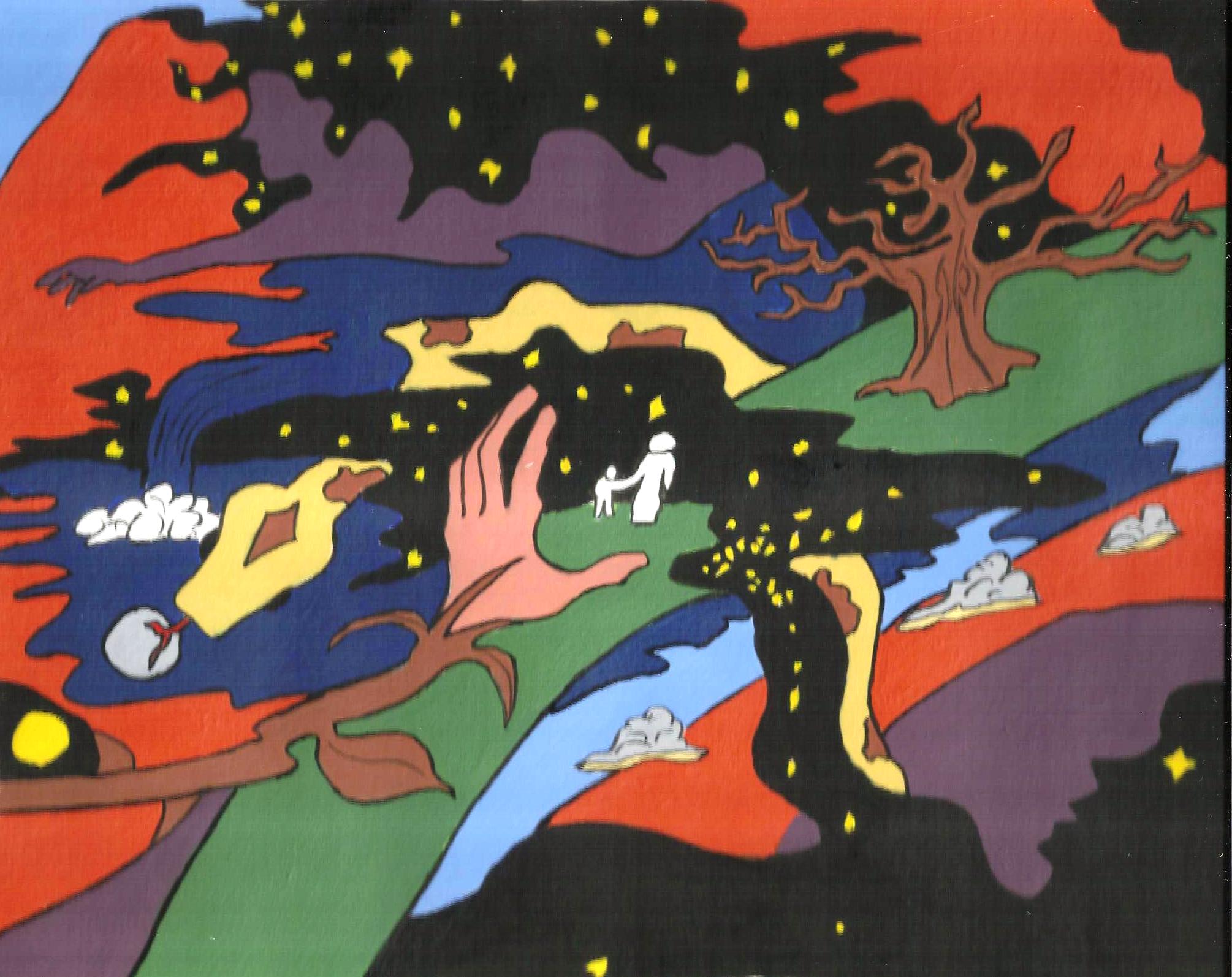
Where Stars Go

Written by The Keeper Leave a Comment

pond

The boy said, “Where do stars go during the day?”

“Where do stars go?” his mother said. She scanned the blue sky. They sat in a field of tall grass that swayed in the breeze. The boy’s mother sat in her long, black dress, her knees up, her arms hugging her shins. The boy sat the same way in his black suit and clip-on tie. “The stars go away during the day,” his mother said.

“Where are they now?” the boy asked, squinting at his mother in the sunlight. The autumn breeze teased his hair and caressed his cheeks, the same way his mother often did.

“The sun came out and they all went home,” she said.

“Are they a-scared of the sun?”

“No, they aren’t afraid of the sun. They just know he’s big enough to light the sky by himself, and when he’s there, they can all go home and play.”

The boy looked at the sky. He remembered the hugs and kisses from earlier that day. People had been crying. People had told him he was “such a brave little boy” and now he was “the man of the house.” They’d marveled at how big he was getting. They’d messed his hair and pinched his cheeks. They’d had tears in their eyes. His mother had led him to see his father. His father was sleeping. They’d knelt. He’d folded his hands like hers.

“Why’s Daddy sleeping?”he’d whispered.

“Because Daddy got sick. And now he’s resting because he has to go away for a very long time.”

Then everyone had stood around a large wooden box. They’d listened to a man speaking big words with a big voice.

“Where’s Daddy going?”the boy had whispered to his mother as the man spoke.

“Daddy has to go to heaven, dear,”his mother had answered.

“Where’s that?”

“Heaven is with the stars,”she’d said.

The boy sat in the field with his mother. He put his hand in front of the sun. He was bigger than the sun. He held it in his hand. It glowed red between his fingers. “Where’s home?”

“Excuse me?”

“Where’s the stars’ home?”

The boy’s mother sat silent. Then she pointed to a pond nestled in the field. It shimmered like glass. “Some live in that pond,” she said.

Atop the water, billions of stars danced and jumped. They ran across the surface with brilliant, white fire. They twinkled and winked more intense than the boy had ever seen them do in the sky.

“What do they play?”

“I don’t know. You’d have to ask one.”

“Why haven’t you asked one?”

“I’ve never been able to catch one.”

“Will Daddy play with them?”

“I’m sure he will, dear,” she answered. Her eyes shimmered like the pond.

“Can I ask them what they play?”

“Do you think you can catch one?”

The boy looked at the pond. The stars dashed back and forth. They left streaked trails behind them. The boy looked up at his mother. He said, “Yes.”

“Be careful.”

“I will.”

The boy stood on his short legs and ran toward the pond. The long grass brushed his knees. As he approached the pond, the stars darted away from and toward one another, engaged in a sort of tag or dance. The boy’s breaths deepened. His legs worked as hard as they could. The sun warmed his face and hair. As he neared the water’s edge, the stars moved away from him, cowering to the far end of the pond.

“Wait,” the boy called as he reached the edge of the water. “What do you play?” he hollered over the pond. The stars continued to dance and jump and skip across the water’s surface. “What do you play?”

Filed Under: Campground, Chapter One

The Doppler Effect

Written by The Keeper Leave a Comment

The faster he ran, the faster the breeze rushed by his face. His feet crackled and popped the fallen leaves and thin twigs. He stopped, the breeze stopped.

The Doppler Effect….

“ReeeEEEouououou….” the sound rose and fell in his chest and throat.

“Paul,”his mother’s voice called. It was a far voice.

His finger streaked in front of his eyes. It created dark trails.

“Paul,”his mother’s far-off voice called.

He ran. The shades of fire hanging from the trees’ limbs blurred into a wall of bleeding hues.

The Doppler Effect is….

The Doppler….

The Dop….

Dop….

The Doppler….

“ReeeEEEouououou….”

He stopped running. The breeze stopped.

He saw Mr. Hayward. Mr. Hayward looked at him.

Mr. Hay-ward. Hay-ward.

Mr. Hayward had brown eyes. This time, Mr. Hayward’s teeth weren’t showing.

Mr. Hayward was on top of the girl from downstairs.

Cin-dy. Cin-dy.

The Doppler Effect is a change in a sound’s frequency….

“ReeeEEEouououou….”

The girl’s eyes were blue. Her eyes did not blink.

Mr. Hayward held his hand over the girl’s face.

Mr. Hayward was hurting the girl.

The breeze rushed by his face. The leaves’ colors blurred in bleeding, fiery hues. His feet struggled to keep up with his body.

“ReeeEEEEouououou….”

The girl’s eyes were blue. They did not blink.

Mr. Hayward hurt the little girl.

The girl’s eyes were blue.

Mr. Hay-ward.

The Doppler….

“ReeeEEE….”

His mother stood before him. Her face was close. Her breath was warm. “Paul,” his mother’s voice said. Her voice hurt his ears. “You don’t run on me like that. You don’t….” Her face moved away. Her voice wasn’t loud anymore. “You need to stop”—she signed the word, hitting her hands together as if cutting something—“when someone says, stop.” She cut her hands together again.

His finger streaked across his vision. His finger stopped and his hand was in his mother’s hand.

“Okay, it’s time to go home.” Her voice rose and fell like the Doppler Effect.

The Doppler Effect….

The Doppler….

Doppler….

Mr. Hayward hurt the girl.

He squeezed his mother’s hand with both of his. He and his mother stopped walking. He squeezed her hand harder.

“ReeeEE—”

Mr. Hayward hurt the girl.

“—Eouououou!” He tried to breathe out Mr. Hayward. He squeezed harder.

“Paul, let go,” his mother’s voice said with her Doppler voice.

He squeezed harder.

Mr. Hayward hurt the girl.

“Paul, you need to let go,” his mother’s voice said as she pried at his hands.

He found her arm between his teeth and he bit.

To Be Continued…

Filed Under: Chapter One, Uncategorized

Nocking the List: Chapter 1— No Balls

Written by The Keeper Leave a Comment

At least he was good-looking. Which was helpful. Good-looking ones tend to be the easiest. Also the really dweeby ones. The dweebs are good because they are too caught up in the fantasy of a hot girl having somehow gone all Beauty and Beast on them—her seeing past their boring exterior to that heart of gold shit—that they never allow that fantasy to dissolve enough to believe they’d been had. The good-looking ones are easy because they can’t imagine anyone would dream of scamming them in the first place. So, yeah, John Thompson was a good-looking one, although good-looking with muted charisma—think a Clive Owen paint-by numbers that had yet to be filled in with any vitality (or, just think Clive Owen). And John Thompson was rich. Very rich. All he talked about was how he’d fleeced some so-and-so with a short sale, or scammed whomever with some put option. At one point, he even said about one of these deals: “The sucker never saw it coming.” Sophie liked to think that someday that would be John Thompson’s epitaph: Sucker never saw it coming.

Sophie Monroe was a package of contradictions. Elegant in her athleticism, boyish in her femininity, and harsh in her sweetness. John Thompson had spotted her ad on Craigslist. Young girl in town for a night, looking for someone with whom to have drinks.

Sophie and John pulled up to a big Colonial house in Greenwich. Brick façade, manicured lawn, three-car garage. They pulled up to the house in a Jag.A fucking Jag, Sophie thought. Not a Porsche. Not a Beemer or a Benz or something with actual high performance capability. A Jag. The ultimate in poser, look-at-me status symbols.

Sophie and John climbed from the Jag and stumbled up the walkway toward the house. At the bar earlier, it was John’s plan to get Sophie drunk by challenging her to shot after shot of Patron, John even suggesting body-shots for the last one. Which Sophie accepted—making sure to blow a puff of extra-warm air on his neck before licking the salt off of it—but the asshole didn’t realize she could hold her liquor far better than he could. Hell, she could drink Jose Cuervo under the table, if need be.

So from the Jag, they made it to the front door of what John called his Pad. That’s what he called it. His “Pad.” John was the type of guy that liked to invent hip, insider lingo—John-speak, if you will—and this lingo broke most things down to three letter catch phrases. The Pad. The Jag. He even called the Patron, “Ron.” “Wanna do a shot of Ron?” “Another shot of Ron?” Sophie wanted to say to him, “Who the fuck is Ron?” But instead, she smiled and said, “Absolutely. Another shot of Ron it is.”

At the front door of his Pad, John dropped his keys and, with Sophie hanging in his arms, he retrieved them with limited dexterity. As they stood from the stoop, Sophie slumped a little in his grasp. This slump was by design, of course.

“Whoa,” John said to her, “You okay?”

“I’m great,” she said with a big, goofy smile. “Just drunk.”

Just drunk: the mating call of assholes.

Some men would find this situation blurring ethical lines, and at this point, a look of moral crisis might come into such men’s eyes. Other men would have a look of disappointment—knowing that they could never actually take advantage of a drunken young lady. The really decent guys would immediately turn back for the car, saying that they’d bring the girl home right away. But not John. John closed deals. And John got a look in his eyes like he’d just hit the fucking lottery.

By the way, those decent guys that offered to drive drunken girls home, those were the ones Sophie avoided.

When John was finally able to gain his and Sophie’s balance, he fumbled the house key into its lock, unlocking the door and kicking it open. Before they’d even crossed the threshold, a Shih Tzu bolted up to them, its plumed tail wagging, the thing jumping around as if being electrocuted by its excitement.

A Shih Tzu: the final confirmation that there is a Mrs. John Thompson. Sophie figured it wasn’t enough that John lived in Greenwich rather than Manhattan, or that he lived in a house twice the size than was needed for a bachelor, but he owned a Shih Tzu. There are only two types of men that own Shih Tzu: men who are gay, and men who are married.

Although none of this was necessary for Sophie to deduce John’s marital status. The fact that he’d answered her Craigslist ad was proof enough. The good-looking ones were always married. Why else would they be answering a Craigslist ad in the first place?

Sophie bent down to greet the dog, saying, “Hey. Cute dog.”

She knew Shih Tzu tended to be little bitches—like their owners—and she half expected the thing to bite her. The dog backed away from her for a moment, growling, and then it approached her again to be petted.

“Yeah, that’s Wee.”

“Wee?”

“Well, Stewie. But I like to call him Wee.”

“Of course you do.”

Wee? she thought. How about Stu, that’s only three letters? But, no, pretentious prick goes with Wee.

Sophie stood from petting Wee and regarded the house. The place meticulously decorated. Another sign of his being married.

“I like the pad,” Sophie said, staggering drunkenly into the living room.

“Yeah? You really like it?”

Sophie turned toward John, pretending to stumble, and she lunged into his arms, saying, “It goes with your car.”

“John grinned and said, “Yeah? Well, the Jag’s for fun. The Pad is a necessity.”

Sophie plastered another goofy smile on her face. “We can have fun in the Pad, too.”

John smirked and pulled her up to his lips for a kiss. The kiss was tender at first, but then he opened his mouth to obtain her tongue.

Sophie pulled away, leaning a little off balance, and she said, “I could use a drink.”

John smiled, that lottery-winning look back in his eyes, and he said, “All right. I can provide that.” He then kissed her on the forehead and walked off for the kitchen.

Sophie watched him leave, wiping her forehead with the back of her hand. She turned her attention to the living room, making a slow, circling sweep of the space, inventorying the furnishings, the gizmos and the trinkets, the different knick-knacks on the shelves. She called toward the kitchen, “This really is a nice place.”

John called from the kitchen. “Thanks.” He then called, “Is wine okay?”

“Wine’s perfect,” Sophie called. She spotted a bookcase in a side nook of the room. As she headed toward the bookcase, she looked down to find Stewie at her feet. She bent over and quickly scruffed the top of the dog’s head before returning her attention to the bookcase’s contents. She was not surprised to spot a locket-sized framed wedding picture of John with a high-strung-looking woman. Sophie figured John had removed all the pictures of the wife—or children if there were any—but he must have missed this one. She looked down at Stewie and smirked. But the dog didn’t seem to give a shit about his master’s infidelity.

John called from the kitchen, “I’ll open a ninety-four Stags Leap. Got three bottles. Hard to find. They’re about four-hundred bucks a bottle.” He paused a moment and then said, “Hey, four hundred bucks for a bottle of Stags Leap. Get it?”

“Yeah, that’s funny,” Sophie called. She looked down at the dog and raised her eyebrows, saying, “Is he for real?” The dog cocked its head, looking as if he really didn’t give a shit that his master was a doofus either. Sophie called toward the kitchen, “Four hundred bucks, you say?”

John returned from the kitchen with two glasses of red wine. He handed one of the glasses to Sophie, and he said, “Yeah, I got them at auction, along with an eighty-five Cristal worth a cool G.” He clinked her wine glass and they each took a sip. “Smooth, no?” he said.

“Quite,” Sophie said. They took another sip. “So what’s the story with your balls?”

“Excuse me?”

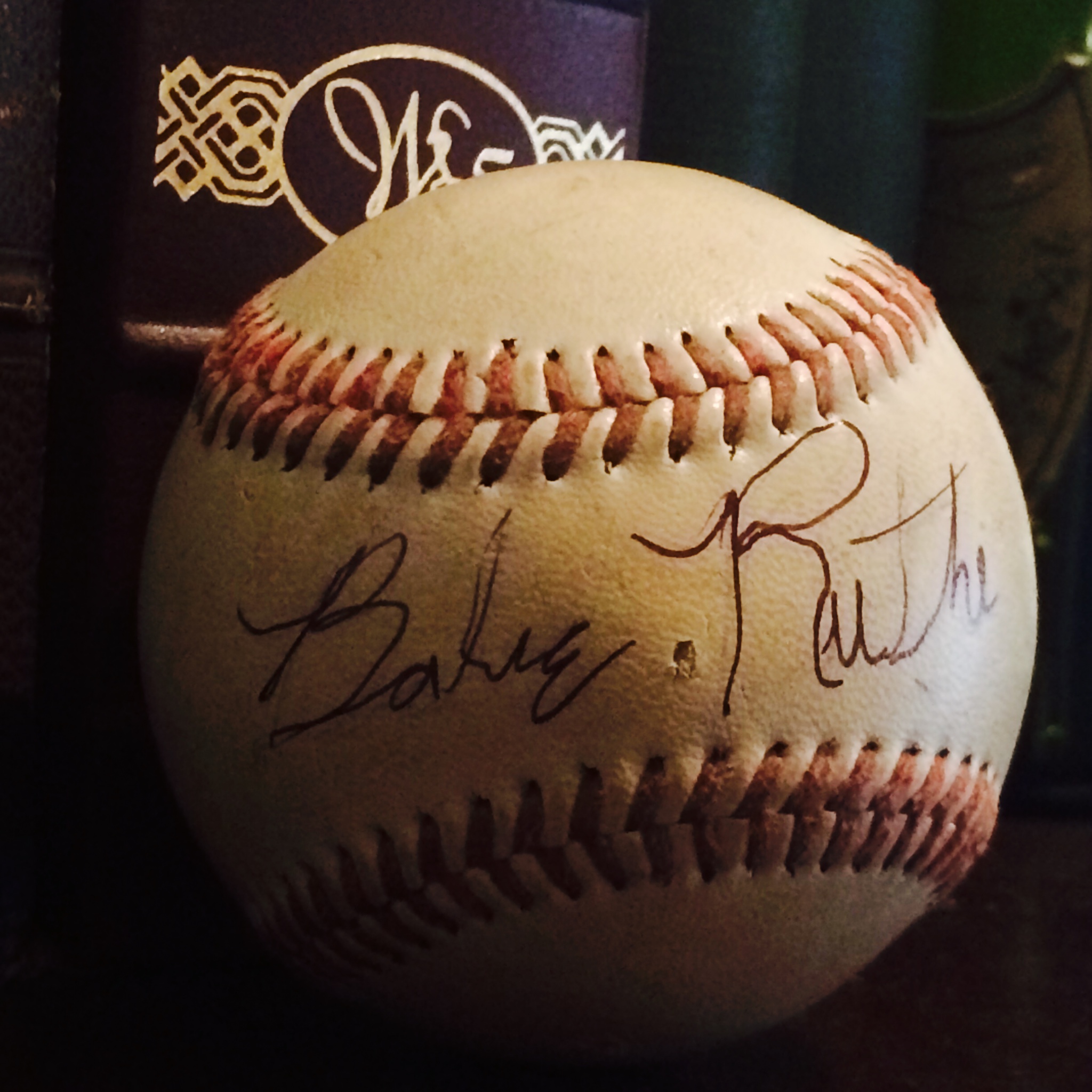
Sophie motioned to three baseballs that were on the bookcase. She said, “You’ve got these baseballs here.” She picked one of the balls up, saying, “Doesn’t really go with the rest of the pad.”

John grimaced, as if Sophie had grabbed one of his actual testicles, and he took the baseball from her, saying, “Those baseballs are worth a fortune. Signed by Ruth, Maris, and McGwire, all from the years they broke the homerun record.”

Of course she knew what the balls were, and it was no accident that she had picked up the Ruth ball, knowing it would elicit the most anxious response from him.

“Oh, so sorry,” she said in her best I’m-just-a-stupid-girl voice.

John returned the Babe Ruth ball to the bookcase as if it were plutonium. He said, “I’m still trying to get a Bonds.”

“Oh, yeah? Whoever that is,” Sophie said, again with her just-a-girl voice.

“You don’t know who Bonds is?”

Of course I know who Bonds is, dipshit. “James Bond?”

“Um, no, Barry Bonds.”

“Oh. Right,” she said, rolling her eyes.

They sipped their wine again, and then Sophie said, “Hard to believe that such a successful guy like you would need to answer an ad on Craigslist for a date.”

John shrugged and said, “What can I say? The price of success can sometimes be loneliness.”

Sophie kind of almost threw up in her mouth, and part of her wanted to douse him in the Stags Leap. Instead, she allowed her gaze to drift toward the wedding picture on the bookcase, eliciting another anxious response from him. He quickly took the glass of wine from Sophie’s hand and set the two glasses on the coffee table.

He said, “Why don’t we sit on the couch?”

Sophie let that big, goofy smile slip onto her face again and said, “I was thinking more like, how about we hit the sack.”

It doesn’t take long before they’re rolling around on the bed in Mr. and Mrs. Thompson’s bedroom. Sophie wearing nothing but a pair of boyshort panties and a spaghetti strap top. John wearing his silk boxers and black, knee-high dress socks. Sophie would always make them keep on their socks. Something about the goofiness of a guy stripped down to nothing but his dress socks cracked her up.

While they were making out, John stopped and said, “Hard to believe that a smoking hot girl like you needed to post an ad on Craigslist for a date.”

Sophie said, “Well, sometimes the price of adventure is taking a chance.”

“Just how much adventure are you looking for?”

“Why? Are you feeling adventurous?” Sophie asked.

“Definitely.”

She smiled and flicked the hair of her blond wig from her face. Glancing around the room, she seemed to spot something, and she darted from the bed to the room’s curtains—she’d actually spotted the ties on the curtains when she’d first entered the room, and she’d known exactly what she was going to do with them, but still, she acted as if the notion had spontaneously popped into her head. She pulled free the ties, and turned back toward John, she holding the ties in her fingers as if about to create a cat’s cradle. She said with the most child-like smile she could muster, “Ever been tied up?”

It was Sophie’s experience that when a girl flashes a child-like smile and uses a baby-doll voice, she can ask a man to do anything, especially if that anything has an element of kink to it.

John, lying there, half-mast, looked as if he were about to pop right out of his boxers. This excitement for kink was always tinged with trepidation, as if the asshole were nervous he wouldn’t be able to keep up or handle it. And John deflected this proposal by saying, “From what I’ve seen so far, maybe I should do the tying.”

Yeah, you’d like that. If you can’t subdue her with alcohol, subdue her with bondage.

Sophie darted back to the bed. “Nope. You’re first,” she said, and then added for good measure, “because you’re such a bad, bad boy.” She said this in another baby-doll voice, and of course John’s hands came up immediately to be tied.

And that was the exact moment John gave up all control to a stranger he’d just met on Craigslist. Imagine, a master of the universe, who buys and sells the lives of thousands of naive investors, gets undone by a baby-doll voice.

John grinned and placed his wrists against the headrest of the bed. Sophie tied one wrist, all the time teasing him with blown kisses. John growled like a tiger, feigning scratches with his free hand. Sophie tied his other hand and then stepped back to inspect her work. She scrunched up her face in a displeased look and glanced around the room as if something more were missing. And, again, she knew what that something was the whole time. “Here we go,” she said, darting to the end of the bed and snatching up John’s discarded shirt. She returned to the bed and blindfolded Mr. Put-option, wondering how much he’d have made if he’d shorted this date.

“Don’t move, tiger,” she said.

John purred.

Sophie stepped back and took a moment to enjoy the sight: millionaire adulterer bound to his king-size bed with curtain ties, blindfolded with his own shirt, erection trying to free itself from his silk shorts, and, of course, the black, knee-high socks. Perfect.

Sophie gathered up her clothes and began to dress.

John, still blindfolded, cocked his head and said, “What are you doing?”

“Getting ready,” she said. “Now, don’t you move, tiger.”

“Where are you going?” he said, sounding as if the first bloom of premature blue balls were about to hit.

She slipped on the last of her clothing and started toward the door, saying, “I’m going to get the wine.”

She bounded down the stairs.

Stewie was waiting at the foot of the steps, the dog’s tail a blur, the thing eager for attention.

Sophie darted into the living room with the dog at her feet, almost tripping over the thing. She grabbed her pocketbook—an over-sized leather bag she’d left on the couch. She took the bag into the kitchen, where she found two wine refrigerators—the pretentious Sharper Image, yuppie specials. She opened the refrigerators and picked out the remaining bottles of Stags Leap and the bottle of Cristal. She also found a couple of bottles of Dom Perignon, and she wondered why the asshole hadn’t served the beverage with three letters to its name. Want some Dom? I have plenty of Dom. We can take my Jag to the Pad for some Dom.

As she stood from the wine refrigerators, the bottles clinking in her bag, she almost stepped on Stewie. She looked down at the dog, the thing looking up at her as if wondering why she was taking his buddy’s wine, and she said to the dog, “Don’t look at me like that. You know he’s an asshole.”

John called from upstairs, the blue balls probably taking full effect, “Hey, baby, where are you?”

She called toward the ceiling, “Just getting some goodies, tiger.”

He called down, “There’s whipped cream in the fridge, how about I be your dessert tonight?”

Sophie looked down at Stewie, asking the dog, “Seriously?”

Stewie cocked his head, his tail going nuts again.

John called, “C’mon, baby, I got a sweet treat for you right here. All it needs is a little whipped cream, and you can be the cherry on top.”

Sophie scrunched up her face, saying “Ew.” She then looked down at the dog and said, “See? Asshole.” She walked over to the stairs and called up, “Be right there, tiger.”

She returned to the kitchen, walking to the refrigerator—one of those industrial, silver monstrosities that belong in a restaurant—and she rifled through the trendy condiments and cooking sherries to find the whipped cream.

She started back toward the stairs, shaking the canister and saying to the dog at her feet, “C’mon, Stewie.”

She returned to the master bedroom with the dog, finding the eager John writhing on the bed in anticipation. She said to him, “I got a surprise for you, tiger.”

“Oh, yeah, baby?” he said, offering his tiger growl again.

“Oh, yeah,” Sophie said. She sprayed the whipped cream on his dick, which was now fully erect and sticking out of the fly of his boxers. The guy groaned with delight. And she said, “Ready, tiger?”

“Oh, yeah, baby.”

Sophie bent down and picked up Stewie, putting the dog on the bed. The dog immediately going to town on the whipped cream.

John groaned in ecstasy, saying, “Oh, yeah, baby.”

Sophie tilted her head, watching man and dog, and she covered her mouth with her hand. The scene belonged in a museum, a true masterpiece. She could have enjoyed this sight all night, but it was time to get going. She headed back down the stairs, and as she reached the bottom step, she heard John yell, “Hey, wait a minute, hey.”

Sophie ran into the kitchen, retrieving the bag with the wine. Then she went to the bookcase in the living room, all the time listening to John yelling from upstairs, “Stewie, no. Stewie, stop.” She took John’s baseballs from the bookcase, placing them in her bag along with a few other expensive looking knick-knacks.

John was yelling, “Hey, Shauna, where did you go? This isn’t funny.”

Sophie headed to the door, laughing. For one thing, her name wasn’t Shauna. And what’s more, it was funny.

More of Nocking the List will be coming soon to a F.N. Best Store near you. 

Filed Under: Chapter One, Nocking the List

  • « Go to Previous Page
  • Page 1
  • Page 2
  • Page 3
  • Go to Next Page »

Primary Sidebar

More of this Story

  • The Newspaper
  • Stan the Man
  • Reflections, Echoes, and the Mechanical Shark
  • Thank-ya Very Much
  • Heads Up
  • Nocking the List: Chapter 1— No Balls
  • The Doppler Effect
  • Where Stars Go
  • With Drawn: Part 1 — Once Upon a Time
  • Salt and Lime
  • Beneath the Weeping Tree: Part 1 — The Notebook
  • Death Tours: Part 1 — Welcome to Death Watch
  • Auras: Part 1 — Mother Night
  • The Skeleton: Part 1 — A Stringless Marionette
  • Earworm: Part 1
  • The Umbrella
  • Howdy Neighbor
  • The Ring
  • A Very Unfriendly Vice: Part 1— Inside In
  • The Old Stone Church
  • The Book of Ira

People & Places

  • A Very Unfriendly Vice
  • Apartments
  • Auras
  • Beneath the Weeping Tree
  • Campground
  • Carl
  • Chapter One
  • Death Tours
  • Demon's Point
  • E.B. Richardson
  • Earworm
  • High School
  • Hospital
  • Howdy Neighbor
  • Ira
  • Jacob
  • Jail
  • Louis Ting
  • Marina
  • Max
  • Middle School
  • Newspaper
  • Nick
  • Nocking the List
  • Pizza Shop
  • Price House
  • Reflection, Echoes, and the Mechanical Shark
  • Shops
  • St. Sebastians & Cemetery
  • Stone Church
  • Stories
  • The Bar
  • The Skeleton
  • The Woods
  • Uncategorized
  • William
  • With Drawn

Copyright © 2026 Mystic Island · Design by NoWallsWeb · Log in